Real answers to the questions homeschool parents actually ask, from CVC words and the Clock of Eras to freedom within limits and the Five Great Lessons.
Who She Was
About Maria Montessori
Maria Montessori was born on August 31, 1870, in Chiaravalle, Italy, and in 1896 became one of the first women in Italy to earn a Doctor of Medicine degree. Her early work with children with intellectual disabilities led her to a discovery that would shape the rest of her life: given the right environment and real, purposeful materials, children became calm, deeply focused, and genuinely eager to learn on their own.
On January 6, 1907, she opened the first Casa dei Bambini, or Children's House, in Rome. From that single classroom, her method spread across the world, and she spent the rest of her life writing, training teachers, and advocating for children everywhere, work for which she was nominated for the Nobel Peace Prize more than once.
"We serve the future by protecting the present."
The Absorbent Mind
Montessori is an approach to learning built on the belief that children develop themselves when given the right environment and enough trust to work within it. Rather than a teacher standing at the front of a room directing every step, the adult prepares a space full of purposeful, hands-on materials, presents each one clearly, and then steps back to let the child choose their own work, repeat it as many times as they need, and move at their own pace. The goal is never simply covering material. It is building independence, concentration, and a genuine, lasting love of learning. Maria Montessori described this shift plainly in The Absorbent Mind: "Our work is not to teach, but to help the absorbent mind in its work of development." The adult's role changes from instructor to guide, and the child's own effort becomes the true engine of their education.
Who was Maria Montessori?
+
Maria Montessori was born on August 31, 1870, in the small town of Chiaravalle, Italy, and grew up in Rome, where her mother's love of reading and learning shaped much of her early life. Against her father's wishes, she pursued a career in medicine at a time when the field was almost entirely closed to women, and in 1896 she became one of the first women in Italy to earn a Doctor of Medicine degree. Her early medical work brought her into contact with children with intellectual disabilities, and it was through carefully observing them that she began developing the educational materials and methods that would eventually become her life's work. On January 6, 1907, she opened the first Casa dei Bambini, or Children's House, in the San Lorenzo district of Rome, originally as a way to care for underserved children while their parents worked. What she found there surprised even her: given the right environment and real, purposeful materials, the children became calm, deeply focused, and genuinely eager to learn on their own. From that single classroom, her method spread across the world. She spent the rest of her life writing, training teachers, and traveling, including years in Spain, the Netherlands, and India after being forced to leave fascist Italy in 1934, and she was nominated for the Nobel Peace Prize more than once for her belief that education was the truest path to a peaceful world. She died on May 6, 1952, in the Netherlands, having spent nearly her entire adult life in service of a single conviction: that children, given the chance, are capable of extraordinary things.
What makes Montessori different from traditional homeschooling?
+
Traditional homeschooling, even when done beautifully, often mirrors a classroom. There is a set curriculum, the adult drives the schedule, and workbook pages are completed in a fixed order. Montessori works differently. The child chooses their work from a range of prepared options, materials are hands-on and self-correcting rather than paper-based, and progress is measured by genuine mastery and interest rather than grade level or a calendar date. Neither approach has to stand alone. Many Charlotte Mason and Montessori-inspired families blend the two beautifully, pairing Montessori's hands-on materials and child-led pacing with Charlotte Mason's living books, nature study, and gentle rhythm of the day.
Do I need to be a certified Montessori teacher to homeschool this way?
+
No. Montessori was built on careful observation of children, not on a credential. What matters most at home is preparing a simple, orderly environment, presenting materials clearly and calmly, and then trusting your child to do the rest. Montessori herself spent decades simply watching children before she wrote down a single method, and that same habit of quiet, attentive observation is the one skill every homeschooling parent already has the chance to practice daily. You do not need a diploma to give a three-period lesson at your kitchen table. It works there exactly as well as it works in a classroom.
Is Montessori only for young children, or does it work through the elementary years?
+
Montessori spans from infancy through adolescence, and Maria Montessori described the whole arc as a series of distinct developmental stages, each with its own needs. The early childhood years, roughly three to six, are what most people picture: sensorial materials, practical life, and the earliest reading and math work. But the elementary years, six to twelve, build directly on that foundation with Cosmic Education, the Five Great Lessons, and increasingly abstract, research-driven study. Rather than a preschool philosophy that a family outgrows, it is a full developmental arc that changes shape as the child changes, all the way through the teenage years.
What is the "absorbent mind"?
+
This is Maria Montessori's term for how young children learn, not by being taught in the way we usually think of teaching, but by absorbing everything around them almost effortlessly, the way a sponge takes in water. From birth to about age six, a child's mind takes in language, movement, culture, and order simply by being present in an environment, with no conscious study required at all. Montessori described this directly: "Children have an absorbent mind. They absorb knowledge from the environment without fatigue." This is exactly why the environment you prepare for your child during these years carries so much weight. The child is not waiting to be filled with information later. They are absorbing it right now, whether or not anyone intends to teach them anything at all.
What are the planes of development?
+
Montessori described childhood as four distinct six-year stages, each with its own way of learning and its own needs from the adult. The first plane, birth to six, is the absorbent mind and sensory exploration. The second plane, six to twelve, is reasoning, imagination, and moral thinking. The third plane, twelve to eighteen, is social and emotional identity formation. The fourth plane, eighteen to twenty-four, is the transition into adulthood. In To Educate the Human Potential, she wrote of the shift into the second plane that "nature has made this a period for the acquisition of culture," a very different task from the first plane's quiet absorption of the surrounding environment. Understanding which plane your child is in changes what kind of support actually helps them, and what kind gets in the way.
What is a "sensitive period," and why does it matter?
+
A sensitive period is a temporary window in which a child is unconsciously and intensely drawn to develop one specific skill: language, order, movement, or writing, among others. During that window, the skill comes almost effortlessly, because the child's whole attention is quietly organized around acquiring it. Miss the window, and the very same skill can take real, deliberate effort to build later. Montessori linked this directly to language development, noting that its emergence "is correlated with an inner sensibility which persists during a certain period of life." This is why observation carries so much weight in Montessori. The goal is not sticking to a preset schedule of milestones, but noticing what your child is quietly, insistently drawn to right now, and meeting them there.
What is the "prepared environment"?
+
The prepared environment is the physical space you set up for your child to work independently in: shelves at their height, materials that are complete and ready to use, everything with its own place, nothing so cluttered that it overwhelms. Montessori called the environment the "third teacher," alongside the adult and the materials themselves, and she was precise about what it should offer the child: real objects sized for small hands, order the child can see and rely on, and enough freedom of movement to choose and return to work on their own. A well-prepared environment does a surprising amount of the teaching work for you, simply by making independent, purposeful choices possible.
What is the Montessori scope and sequence?
+
A scope and sequence is simply the overall order in which Montessori work is introduced across a child's development, and it moves in a fairly consistent pattern across Montessori homes and classrooms. In early childhood, roughly three to six, the sequence typically begins with practical life (pouring, care of self, care of the environment), moves into sensorial work (the Pink Tower, Brown Stair, and similar materials), then language (sandpaper letters, the moveable alphabet, the Pink, Blue, and Green reading series), and mathematics (number rods, spindle boxes, the golden beads), with cultural subjects like geography and botany woven throughout rather than taught separately. In the elementary years, six to twelve, this expands into Cosmic Education, where the Five Great Lessons open each area of study and everything from history to biology to mathematics is connected back to that larger story. The sequence is not a rigid script. It is a map of the order that tends to work with how children actually develop, and Montessori was always clear that the individual child's pace matters more than staying precisely on schedule.
Reading & Language
How do I teach children to read and write in a Montessori way?
+
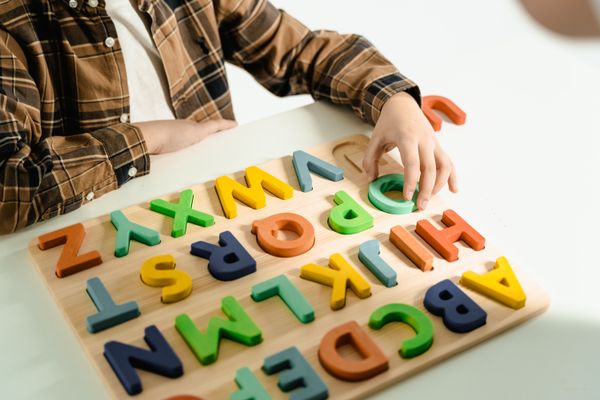
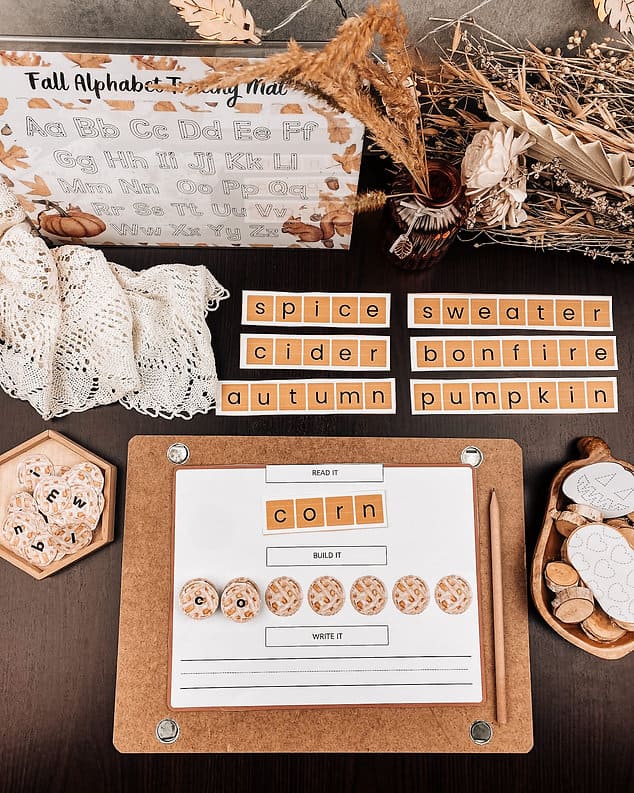
Montessori's approach to literacy moves from concrete to abstract, and from writing to reading, which surprises a lot of parents at first. It typically begins with sandpaper letters, where the child traces each letter while hearing its sound, building the muscle memory of the hand alongside the sound of the letter itself. From there, the moveable alphabet lets the child physically construct words sound by sound, long before their hand is ready to hold a pencil for sustained writing. Once a child has built dozens of words this way, reading those same words back becomes almost automatic, because they already understand exactly how the word was assembled. Montessori made a direct distinction between the two skills, noting that "writing does not come naturally, whereas spoken language does," which is precisely why writing gets built deliberately, piece by piece, rather than assumed to simply appear on its own. Reading then follows as the natural next step, once the child has already done the harder, more constructive work of building words themselves.
How do I teach CVC words the Montessori way?
+
The Montessori path to reading starts with the Pink Series, a structured sequence of three-letter consonant-vowel-consonant words like cat, pig, and sun. You work through one short vowel sound at a time, usually starting with the letter a, using the moveable alphabet so your child physically builds the word before ever writing it by hand. Object boxes, picture cards, and word cards reinforce the same words in different forms, so the child meets each word several times in different contexts before moving on to the next vowel sound. This slow, layered repetition is very much in keeping with how Montessori described the young child's mind: not needing to be pushed forward quickly, but given enough real, hands-on repetition that the concept settles in fully before the next one is introduced.
What is the Pink Series?
+
It is the first stage of Montessori reading instruction, a structured sequence of three-letter CVC words, color-coded pink, that a child works through once they have solid letter-sound awareness. It progresses through beginning sounds, then ending sounds, then the trickiest part of all, middle vowel sounds, which require a much finer level of auditory discrimination. Once a child is comfortable across all five short vowels, they move on to the Blue Series, which introduces consonant blends like the st in stop or the fl in flag, and later to the Green Series, which covers phonograms and the many less predictable spelling patterns in English.
What are sandpaper letters, and how do I use them?
+
Sandpaper letters are wooden cards with each letter cut from textured sandpaper, pink for consonants and blue for vowels. The child traces the letter with two fingers, in the same direction they will eventually write it, while you say the letter's sound aloud rather than its name. This combines touch, sight, and sound all at once, and it is a direct application of a principle Montessori returned to often: that the hand and the mind develop together. As she put it in the 1946 London Lectures, "the hand is the instrument of the intelligence," and the sandpaper letters put that idea into practice by quietly preparing the hand for handwriting long before formal writing lessons ever begin.
Why does Montessori teach writing before reading?
+
It sounds backwards, but it works with how a young child's hand and mind actually develop. Writing a word is a physical, constructive act. The child builds it letter by letter with the moveable alphabet or sandpaper letters, which is genuinely easier than reading, where they have to decode something someone else already created. Montessori observed that "the child needs to manipulate objects and to gain experience by touching and handling," and building words is exactly that kind of active, tactile experience, rather than the more passive act of decoding. Once a child has constructed and sounded out dozens of words themselves, reading those same words back becomes almost automatic, because the connection between sound and symbol was built by their own hands rather than simply explained to them.
What is the moveable alphabet, and when do I introduce it?
+
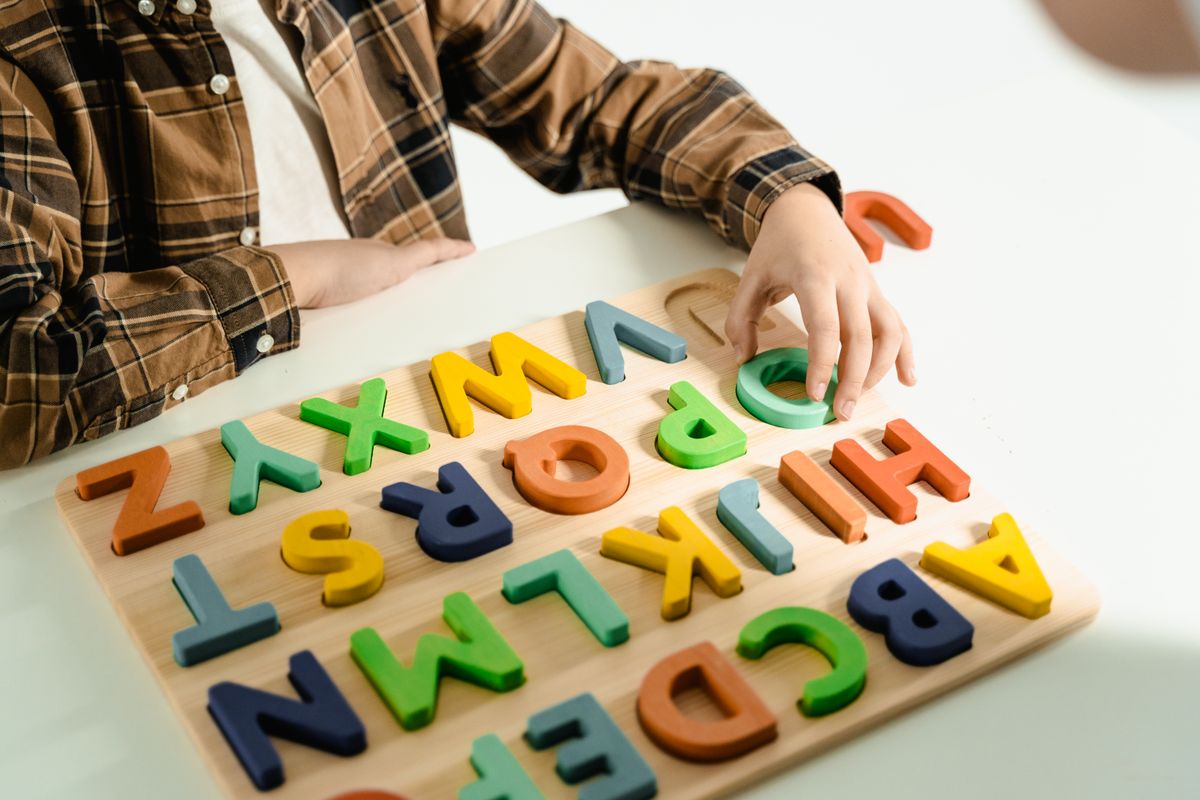
It is a box of individual wooden or plastic letters, usually color-coded by consonant and vowel, that a child uses to physically build words sound by sound, without needing to hold a pencil yet. It is typically introduced once a child knows a solid handful of letter sounds and can identify the sounds within simple words, often around the same time the sandpaper letters are well underway. For many children, it becomes their very first real experience of "writing," well before their hand has the strength or control for sustained pencil work, and it lets the intellectual work of spelling develop ahead of the physical work of handwriting.
What comes after the Pink Series, what's the Blue Series?
+
The Blue Series introduces consonant blends, words like stop, flag, or drum, building directly on the CVC foundation laid down in the Pink Series. It is deliberately introduced as its own separate stage so a child is not decoding a brand new word pattern and learning to blend letters together at the very same time. After Blue comes the Green Series, which covers phonograms and the many less predictable spelling patterns that make English trickier than a purely phonetic language, giving the child one clear, well-paced step at a time rather than the full complexity of English spelling all at once.
My child knows letter sounds but won't blend them into words. What do I do?
+
This is completely normal, and it usually just means the skill needs more concrete practice before it becomes automatic. Go back to the moveable alphabet and let your child physically build very simple, familiar words: their own name, mom, dog, while you say the sounds slowly as they place each letter. Blending is a skill that develops through repetition and direct sensory experience, not through explanation, which is exactly the principle behind so much of Montessori's language work. Resist the urge to sound the word out for them. Give the process time, and let the moveable alphabet do the patient, repeatable work that a worksheet simply cannot.
How do three-part cards work for vocabulary building?
+
Three-part cards are a simple but genuinely powerful Montessori tool. One card shows a picture with its label, one shows just the picture, and one shows just the word. You start by naming the picture cards together, then have your child match the labels to the pictures, and finally test their memory by asking them to find a specific one. This is the three-period lesson in card form (naming, then recognition, then recall), and it works for any vocabulary at all, whether it is animal names, geography terms, or parts of a flower, making it one of the most flexible tools in the whole Montessori language sequence.
Math
How do I teach math the Montessori way?
+
Montessori math follows the same concrete-to-abstract path as everything else in the method, and it moves through a fairly predictable sequence. It starts in the sensorial area, where materials like the Pink Tower and the number rods quietly build an early feel for size, quantity, and sequence, long before a single numeral is introduced. From there, sandpaper numerals connect the symbol to the quantity the child already knows in their hands, and materials like spindle boxes and counters reinforce that a number represents a specific, countable amount of real things. The golden beads then introduce the decimal system itself, units, tens, hundreds, and thousands, in a form a child can physically hold, and the stamp game bridges that concrete understanding into the operations of addition, subtraction, multiplication, and division. Only after all of this concrete groundwork does a child move toward doing the same operations abstractly, with numbers alone on paper. The order matters more than the pace. A child who has truly felt quantity in their hands tends to understand the abstract symbol far more deeply once it finally arrives.
What are the golden beads, and what do they teach?
+
The golden beads are Montessori's core material for teaching the decimal system: units, tens, hundreds, and thousands, using individual beads, bars of ten, flats of a hundred, and a cube of a thousand. A child can literally hold "a thousand" in their hands before they ever encounter the abstract numeral on paper. This concrete-to-abstract progression sits at the very heart of how Montessori teaches math, and it echoes a principle she stated plainly about the young mind more generally: understanding is built through direct sensory experience first, with the abstract symbol arriving only once the underlying concept is already secure.
What is the purpose of the number rods?
+
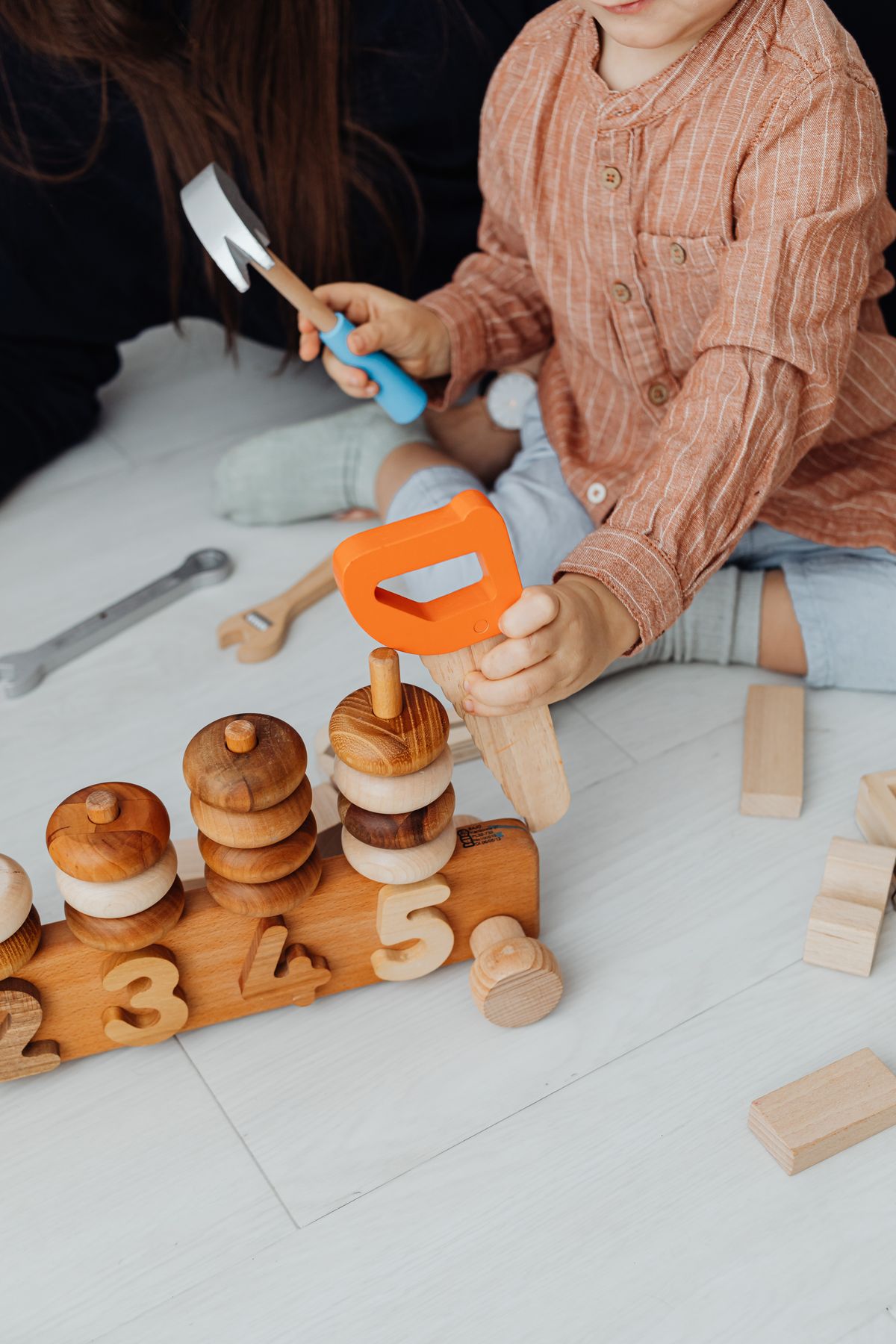
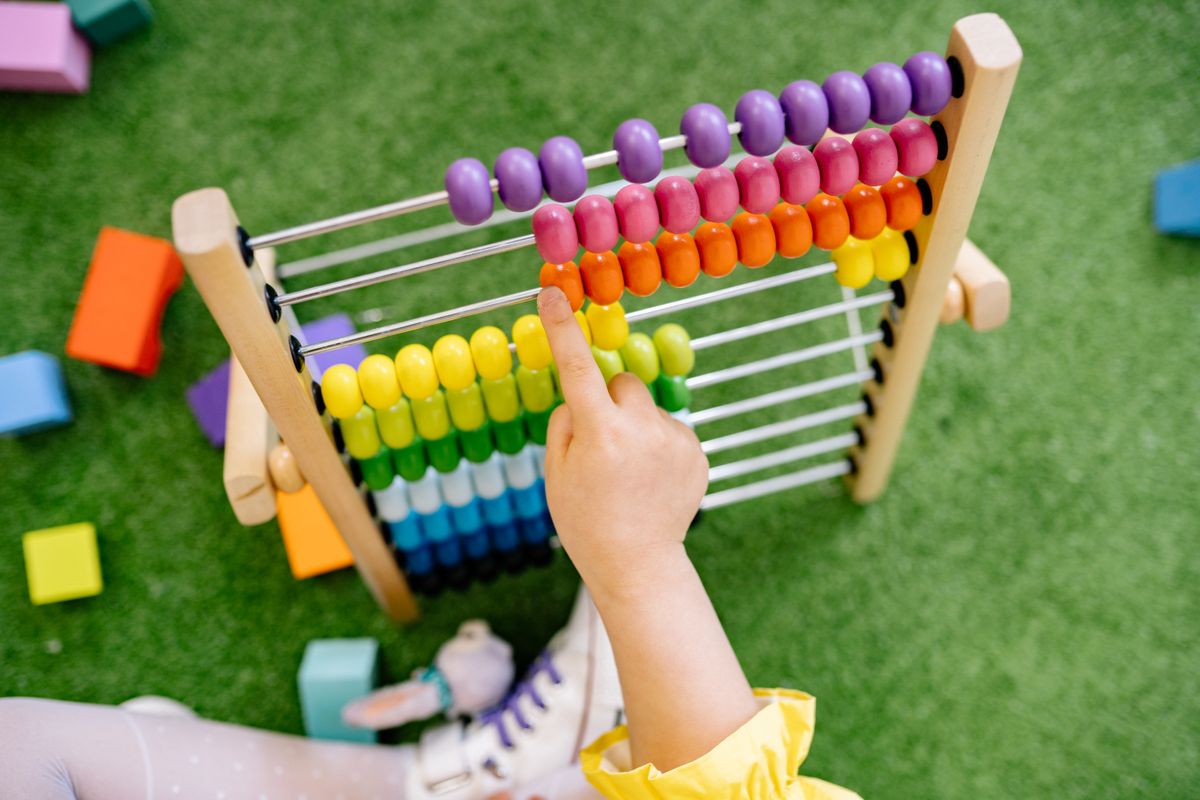
The number rods are ten rods of increasing length, each divided into alternating red and blue sections representing units one through ten. They give a child their first physical sense of quantity and sequence (this rod is longer because it truly is more) before any written numeral is introduced at all. They are often paired with sandpaper numerals, so the child connects the quantity they have already felt in their hands with the symbol that will eventually represent it on paper, keeping the sequence firmly grounded in real, tangible experience rather than abstraction alone.
What are spindle boxes for?
+
Spindle boxes teach the concept that a number represents a specific quantity of separate, countable objects, not just a written symbol on a page. The child counts loose spindles into compartments labeled zero through nine, which also happens to be the gentlest possible introduction to the idea of zero: a compartment that stays empty, holding nothing at all. The material is simple, self-correcting, and remarkably effective at making the abstract idea of "number" feel entirely concrete in a child's hands.
How does the stamp game work, and when do we introduce it?
+
The stamp game uses small color-coded tiles (green for units, blue for tens, red for hundreds) to let a child perform addition, subtraction, multiplication, and even long division with concrete materials, well before doing the same operations abstractly on paper. It is introduced after a child has a solid grasp of the golden beads and the decimal system they represent, acting as a bridge between fully concrete work and the more symbolic, paper-based math that comes later in elementary.
My child can count to 100 but doesn't understand quantity. What's happening?
+
This is one of the most common gaps Montessori addresses directly. Reciting numbers in order is a memory skill, but understanding that "seven" means seven actual, individual things is a completely different one, and the two often develop on separate timelines. Spend time with concrete counting materials, number rods, spindle boxes, or simply loose counters at home, rather than pushing forward through the count sequence itself. The goal is for your child to feel quantity in their own hands before the numeral carries much real meaning on paper, and that concrete foundation is worth protecting even if it means slowing down.
Do I need the full golden bead set to teach Montessori math at home?
+
No, and this is genuinely good news for homeschool budgets. You can teach the same concepts with everyday objects: beans or buttons for units, bundled into groups of ten with a rubber band, printable place value mats instead of trays. What matters is preserving the concrete before abstract progression, not owning the specific polished wooden material. The beautiful golden bead set is lovely to have, but it was never really the point. The sequence of ideas it teaches is.
Practical Life
What is "practical life," and why does Montessori consider it foundational?
+
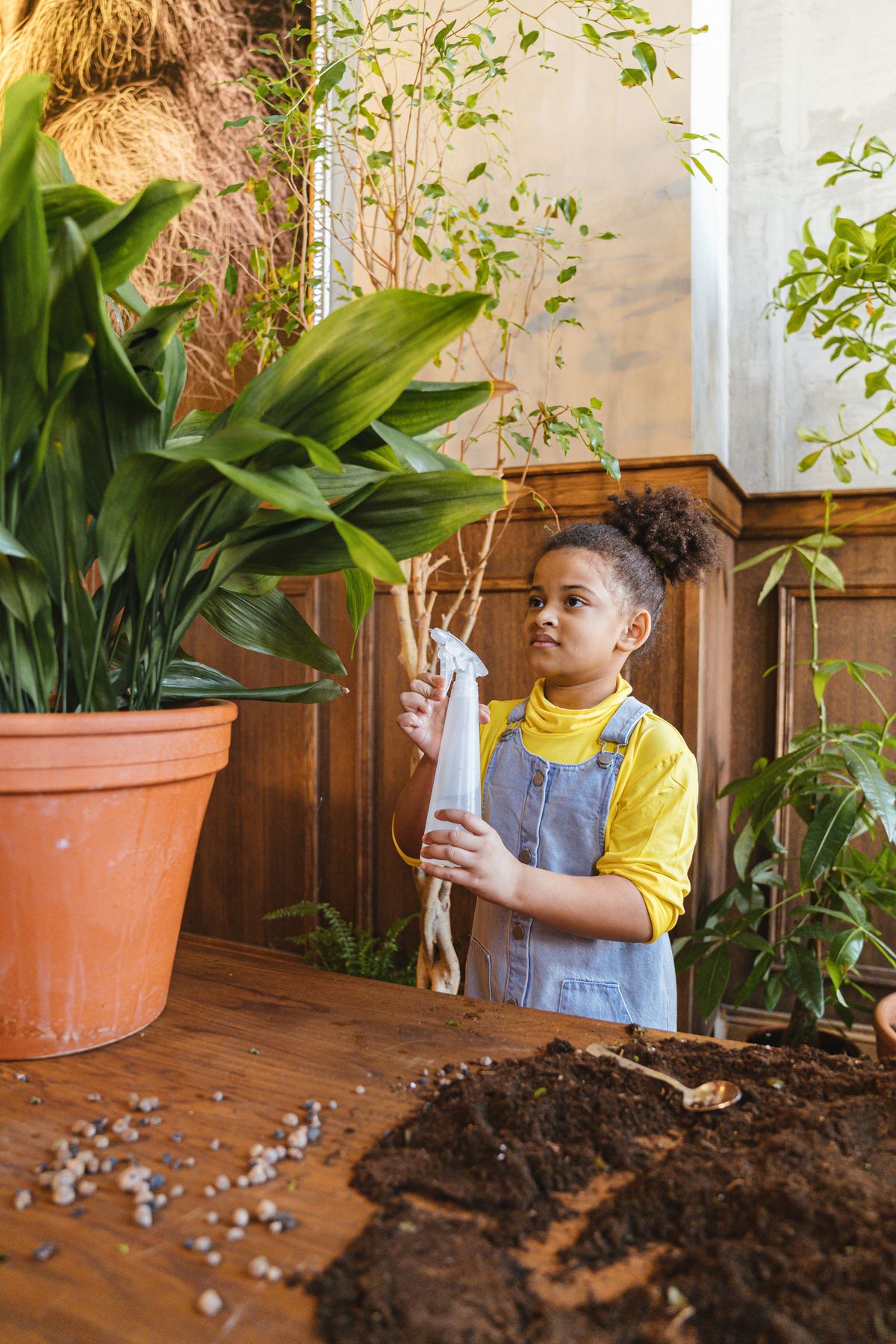
Practical life is everyday, purposeful work, pouring, buttoning, sweeping, food preparation, done with real tools sized properly for a child. It is often the very first area a young child works in, because it quietly builds concentration, coordination, independence, and genuine care for the environment, all of which everything that comes afterward is built directly on top of. Montessori was clear that this work is not a warm-up before "real" learning begins. In her framework, it is real learning, arguably some of the most important learning a young child does.
What are good practical life activities for a 3-year-old?
+
Start with activities that mirror what you already do at home: pouring water between two small pitchers, spooning dry beans between bowls, folding washcloths, using a child-sized broom and dustpan, buttoning a shirt on a dressing frame. The specific activity matters less than three qualities it should have: it should be real, it should have a clear beginning and end, and it should be sized so small hands can manage it independently, start to finish, without needing an adult to step in and rescue the task.
My child seems to prefer pouring and cleaning over "academic" work. Is that okay?
+
More than okay. It is exactly what Montessori would expect, and want, from a young child. Practical life work builds the concentration, order, and fine motor control that everything academic depends on later, so a child lingering here is not falling behind, they are laying a foundation. Let your child stay in this stage for as long as they are genuinely drawn to it. Rushing toward letters and numbers before this foundation is solid tends to backfire, producing a child who can technically perform a task without the concentration to sustain it.
What is the purpose of using real, breakable objects instead of plastic toys?
+
Real glass, real ceramic, and real tools teach a child that their actions have genuine consequences. Spill actual water, and it actually needs to be wiped up. Handle a real glass carelessly, and it really can chip or break. That natural, honest feedback teaches care and precision far better than plastic ever could, because nothing has to correct the child except the material itself and the real result of how they handled it, which is a much quieter and more respectful kind of teaching than constant adult correction.
How much practical life work is normal before moving to academics?
+
There is no fixed timeline, and that is entirely intentional. Some children spend months in this stage, others move on more quickly, and many circle back to practical life work throughout their early years even after academic work has begun. Watch instead for the signs that a child is ready to branch out: sustained concentration on the practical life work they have already chosen, real independence in completing it, and a growing curiosity about letters, numbers, or the wider world that starts to show up on its own.
What is "grace and courtesy," and how do I teach it at home?
+
Grace and courtesy are the specific, practiced social skills Montessori builds intentionally: how to greet someone, how to interrupt politely, how to offer help, how to say no respectfully. Rather than correcting behavior in the moment, when a child is often least receptive to being corrected, you demonstrate these small scenes ahead of time, almost like a short, gentle rehearsal, so your child has already practiced the words and the motions before they ever need them for real. It is one of the more overlooked areas of Montessori practice at home, but it does quiet, steady work on a child's confidence in social situations.
Sensorial
What is the Pink Tower, and what does it actually teach?
+
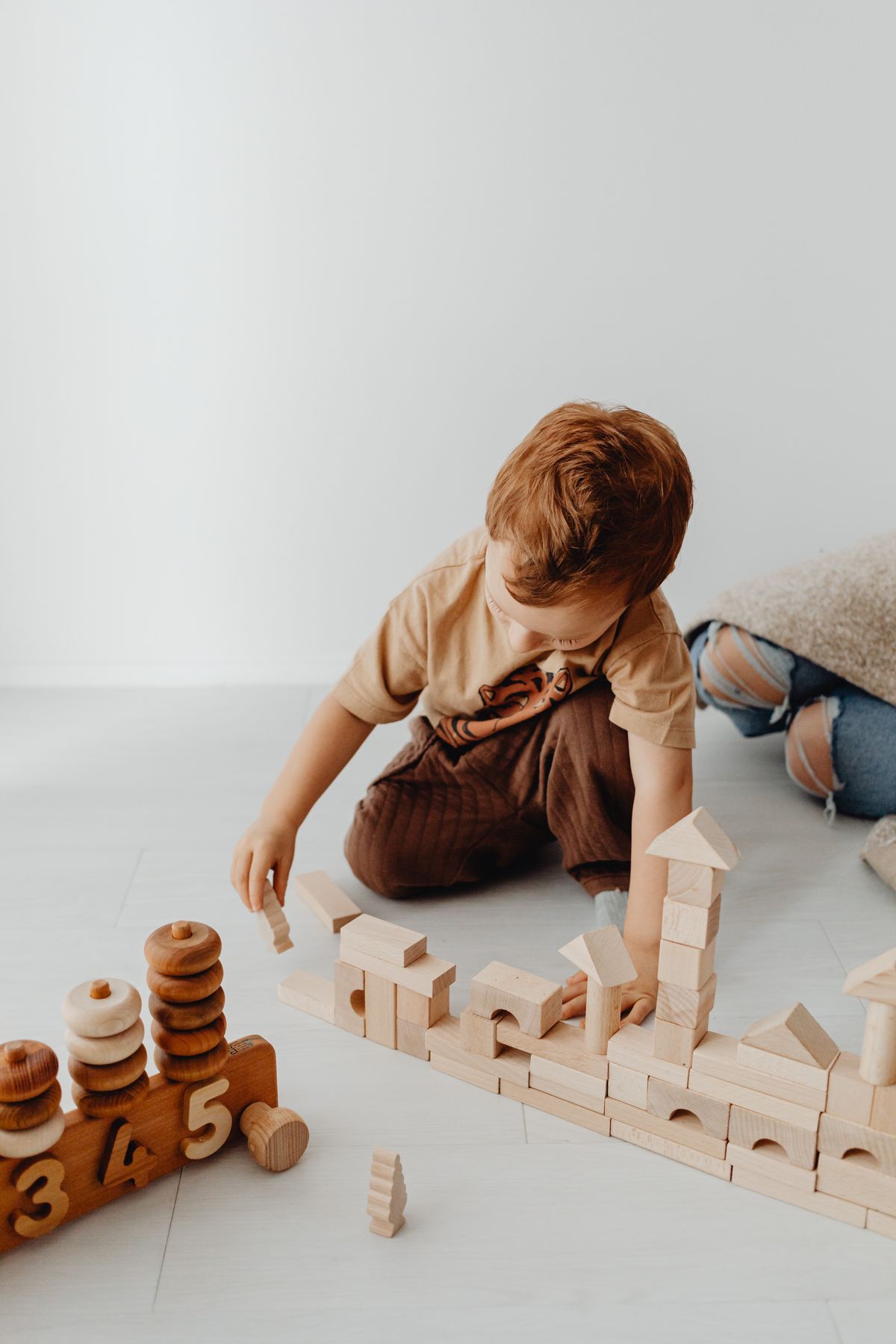
The Pink Tower is a set of ten pink wooden cubes, ranging from one to ten centimeters, that a child stacks from largest to smallest. On the surface, it teaches size discrimination and coordination. But it is quietly doing more than that. The cube sizes correspond to the same base-ten relationships a child will later meet in the golden beads, so their hands are learning the decimal system years before the concept ever has a name attached to it, which is a fairly striking example of how much Montessori materials are doing beneath their simple appearance.
What is the Brown Stair?
+
The Brown Stair is a set of ten wooden prisms that vary in thickness while staying the same length, arranged from thickest to thinnest. Where the Pink Tower isolates size across three dimensions at once, the Brown Stair isolates just one quality alone, thickness, giving the child new vocabulary (thick, thin, broad, narrow) along with the visual and tactile discrimination skill itself, which is a good example of how carefully Montessori materials narrow down to one concept at a time.
Why does Montessori use materials with a "control of error"?
+
A control of error is a built-in way for the child to see their own mistake without an adult stepping in to point it out, a puzzle piece that simply will not fit, a tower that visibly leans if a cube has been placed out of order. This lets a child self-correct privately, which protects their confidence and quietly builds real independence, rather than relying on an adult's approval or disapproval to catch every error along the way. It also shifts the child's relationship with mistakes entirely. A mistake becomes information the material gives back, not a judgment from a person.
What is the purpose of isolating one quality at a time in sensorial materials?
+
Montessori materials are deliberately designed so only one variable changes at a time: size in the Pink Tower, thickness in the Brown Stair, color in the color tablets. This keeps a young child from being overwhelmed by too many differences at once, and lets them build a genuinely clear, precise understanding of one concept before another quality is ever layered on top of it. It is a small design choice with a large effect, because it respects how much a young mind can actually absorb clearly in one sitting.
Culture
What is the Clock of Eras?
+
The Clock of Eras is a large circular chart that represents the entire four and a half billion year history of the Earth as a single twelve hour clock face, where each hour stands for roughly 375 million years. It helps a child grasp something almost impossible to picture in words alone, that humans have existed for only the last sliver of a second on that clock, while entire eras of early life stretched across hours. It is typically introduced in the elementary years, after the First Great Lesson, as part of the broader timeline of life sequence, and it captures something Montessori valued deeply about the elementary child's growing imagination, the ability to travel mentally through vast stretches of time, not just physical space.
What is Cosmic Education?
+
Cosmic Education is the overarching framework for Montessori's elementary curriculum, ages six to twelve, built on the idea that every subject connects to a larger whole, and that a child's own place within that whole genuinely matters. Rather than teaching history, science, and geography as separate, disconnected boxes, Cosmic Education weaves them together into one continuous story. Montessori herself framed the underlying principle this way, that "the fundamental principle in education is correlation of all subjects," giving the child a sense of purpose and interconnectedness rather than a pile of unrelated facts to memorize.
What are the Five Great Lessons?
+
The Five Great Lessons are dramatic, story-form lessons that open the Montessori elementary year: the coming of the universe and Earth, the coming of life, the coming of humans, the story of writing, and the story of numbers. Each is told with real wonder, often with visuals or simple demonstrations, and referred back to throughout the year as new topics come up, giving the whole curriculum a shared thread to hold onto. Montessori believed the elementary child's imagination could stretch well beyond the here and now, and these lessons were built specifically to meet that capacity, rather than underestimate it.
How do I teach geography the Montessori way?
+
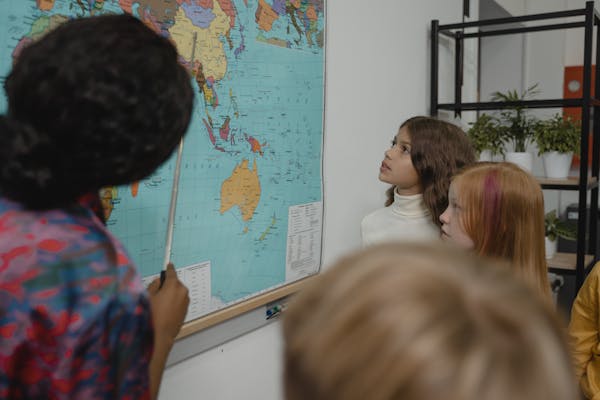
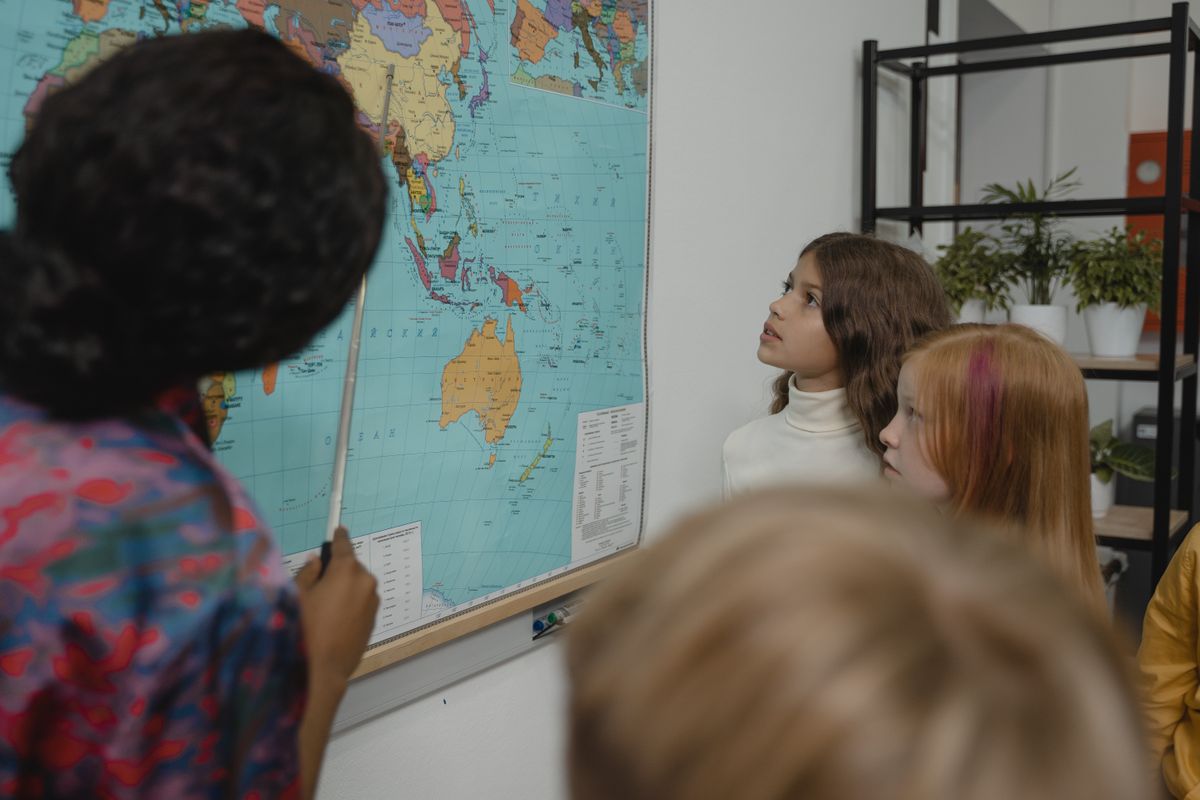
Montessori geography begins with the whole before the parts, which is the opposite of how most of us learned it in school. A young child typically starts with a sandpaper globe, feeling the difference between rough land and smooth water under their fingers, followed by a second globe with continents painted in their traditional Montessori colors. From there, geography puzzle maps let the child piece together continents and then countries by hand, with a small knob on each piece built specifically for a young child's grip. Flag work, simple facts about landforms, and cultural studies of specific countries or regions are woven in gradually, always moving from the concrete, sensory experience of the shape and feel of a place toward the more abstract knowledge of its name, location, and culture. In the elementary years, geography expands further into Cosmic Education, connecting landforms, climate, and human culture back to the larger story the Five Great Lessons already introduced, so geography never feels like an isolated subject memorized from a flat page.
What are geography puzzle maps, and when do I introduce them?
+
These are wooden puzzle maps of continents and countries, each piece fitted with a small knob for a young hand to grasp, which build both geography knowledge and fine motor control at the same time. They are usually introduced around age three to four, starting with the continents before moving on to individual countries, often alongside flag work and simple cultural studies of each place the child encounters, so geography becomes something explored with the hands rather than only memorized from a printed page.
What is the botany cabinet, and what does it teach?
+
The botany cabinet holds a set of wooden puzzle pieces shaped like leaf outlines, oval, lobed, serrated, and so on, that a child traces and matches to learn real botanical vocabulary for leaf shapes. It is a lovely example of how Montessori makes an abstract subject like botany tactile and concrete, long before a child could ever read about it in a textbook or memorize a diagram, giving them a genuine feel for the shapes before the words are attached to them.
How do I teach science the Montessori way without a lab?
+
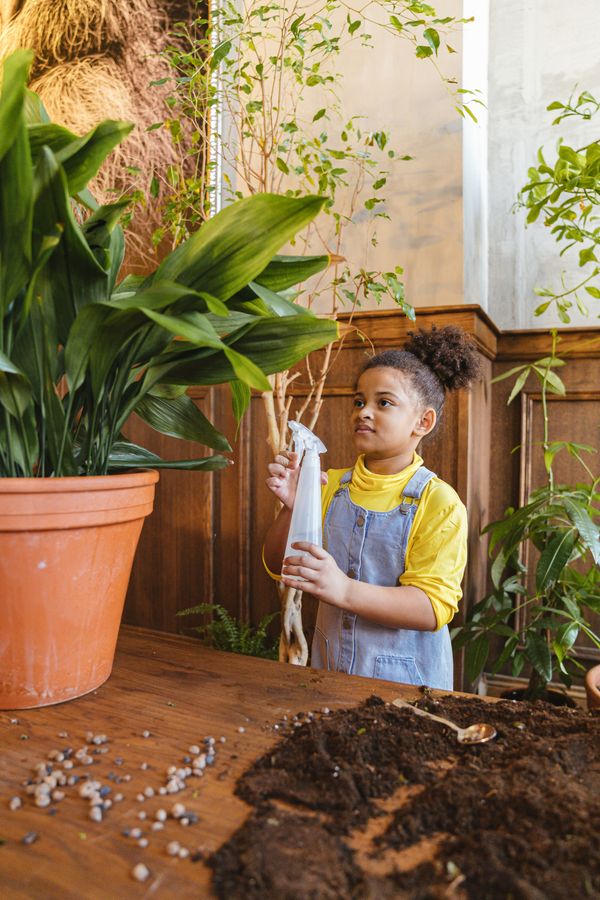
Montessori science at home leans heavily on observation, real specimens, and simple, repeatable experiments rather than any formal lab equipment: a nature walk with a magnifying glass, sorting leaves by shape, a simple sink or float tray at the kitchen table. The goal at this stage is not memorizing facts. It is building the habit of careful, curious observation, which is exactly the same instinct Charlotte Mason's nature study cultivates, and the overlap between the two approaches here is genuinely close.
Freedom Within Limits
What does "freedom within limits" actually mean?
+
It means a child has real freedom to choose their work, move around, and explore, but inside a structure the adult has set and holds consistently. Freedom is not the absence of rules. It is the presence of clear, reasonable boundaries a child can trust, which is actually what allows them to explore confidently in the first place. Montessori described the boundary itself quite specifically, writing that "the liberty of the child ought to have as its limits the collective interest of the community," meaning a child's freedom was never meant to exist in isolation from the people around them.
Doesn't Montessori just let children do whatever they want?
+
This is probably the most common misconception about the method, and it is really the opposite of how Montessori actually works in practice. A child chooses which prepared activity to do, but not whether to treat materials and other people with respect. Those expectations stay consistent and non-negotiable. Discipline in Montessori is not imposed from the outside through rewards and punishments. It is built from the inside, through purposeful work and clear, dependable limits that the child can count on every single day.
How does Montessori handle discipline without punishment or rewards?
+
Instead of external motivators, Montessori relies on natural consequences, consistent limits, and materials with a built-in control of error, so the child gets honest feedback without an adult's approval or disapproval attached to every single moment. When redirection is needed, it stays calm and matter-of-fact, showing the child what to do instead, rather than only stopping what they were doing. Over time, this builds something closer to real self-discipline than compliance, which was always the actual goal.
What is "normalization" in Montessori terms?
+
Normalization describes the shift that happens when a child, given real freedom and meaningful work, settles into calm, focused, self-directed concentration, often after an earlier period that can look scattered or restless. It is considered one of the clearest signs that an environment is working well: less wandering, and much more sustained, purposeful engagement with chosen work. It is not a one-time event either. Many children move in and out of this state as new work is introduced, so it is worth watching for rather than expecting once and being done.
My child struggles to focus for more than a few minutes. Is Montessori still right for us?
+
Yes, and this is often exactly the kind of child Montessori helps most, because concentration is a skill the method is specifically designed to build, not a prerequisite a child has to arrive with already in place. Begin with very short, simple, hands-on practical life activities rather than anything academic, and let the sessions stay brief and genuinely successful rather than long and frustrating for everyone involved. Focus tends to lengthen gradually, as the child experiences real, repeated success with work they chose themselves.
What is the "work cycle," and how long should it be at home?
+
The work cycle is an extended, uninterrupted block of time for a child to choose and complete their own work without being redirected or rushed along. In a full Montessori classroom, this can run as long as three hours. At home, a realistic goal is a shorter, protected block where you genuinely resist stepping in, letting your child work through a task at their own pace, even if it takes considerably longer than you might otherwise choose for them.
Homeschool
How do I start Montessori homeschooling without buying every material?
+
Start with a handful of core areas rather than a full classroom's worth of materials: a few practical life activities using things you already own, a simple sensorial material like the Pink Tower or color tablets, and the moveable alphabet or sandpaper letters if your child is ready for language work. Many of the most important Montessori principles (freedom within limits, a prepared shelf, uninterrupted work time) cost nothing at all, and they matter more to how the method actually functions than any single piece of wooden equipment does.
How do I do Montessori with siblings of different ages at the same table?
+
This is actually one of Montessori's original strengths. Mixed age learning was built into the classroom model from the very start. Set up a shared shelf with activities pitched at a range of levels, let older children help present work to younger ones, which reinforces the older child's own understanding in the process, and expect each child to work at their own pace even when they are sitting right next to each other at the same table.
How much of my day should be "structured" Montessori work vs. free play?
+
Montessori does not really draw a hard line between "structured work" and "play" the way traditional schooling tends to. Purposeful, hands-on work is how a young child plays, in the fullest sense of the word. A helpful rhythm at home is a protected morning work cycle with materials available on the shelf, followed by looser, child-led time in the afternoon, adjusting as you observe what your particular child actually needs on a given day.
What if my child is behind academically compared to peers, is Montessori still okay?
+
Montessori is built around each child's own pace rather than a fixed grade level benchmark, so "behind" is really only a comparison to a different system's timeline, not a true reflection of your child's readiness. Trust the sensitive periods, and let your child build a genuinely solid foundation at their own speed. Montessori children consistently catch up to, and often surpass, peers once a skill has truly taken root rather than been rushed ahead of schedule.
How does screen time fit (or not fit) into a Montessori home?
+
Montessori philosophy leans strongly toward real, hands-on experience over screens, especially during the early years, because screens cannot offer the same sensory feedback, fine motor engagement, or self-directed pacing that Montessori materials provide. Most Montessori homes keep screens minimal and intentional throughout the early childhood years, saving more structured screen use for research and independent projects once a child reaches the elementary stage.
How do I know if Montessori is truly working for my child?
+
Watch for the signs Montessori itself points to: growing concentration, a child who returns to the same work repeatedly by their own choice, increasing independence in daily tasks, and a calm, purposeful quality to how they move through their day. Test scores and pace comparisons are not really the measure here. Sustained, self-directed engagement is, and it tends to show up clearly once you know to look for it.
Instant digital access: Your cart contains printable PDF downloads. Your download links will be emailed immediately after checkout. Nothing will be shipped.