If the words "homeschool schedule" make your shoulders tense, you are in good company. Many families come to a Charlotte Mason homeschool schedule hoping for a rigid, minute-by-minute timetable — and discover something far more freeing: a gentle daily rhythm built on short lessons, unhurried mornings, and wide afternoons for play, nature, and rest. This is a schedule you can actually keep, even with several children at different ages.
Below is a simple, adaptable Charlotte Mason daily schedule you can shape around your own family, along with the principles that make it work and a free printable to help you start.
Why a Charlotte Mason schedule looks different
Charlotte Mason believed children learn best in short, focused bursts, followed by a complete change of pace. Rather than pushing through a two-hour math block, her method leans on short lessons — often just 15 to 20 minutes — that end while attention is still fresh. The result is more learning in less time, and children who finish the school day with energy left for the things that grow them most: reading, creating, and time outdoors.
A Charlotte Mason schedule rests on a few gentle ideas:
- Short lessons protect attention and prevent the daily battle of wills.
- Morning is for the mind. The harder, more focused work happens early, when children are freshest.
- Afternoons are wide and free for handicrafts, nature study, free reading, and play.
- Rhythm over clock. The order of the day matters more than the exact time on the clock.
A sample Charlotte Mason homeschool schedule
Here is a realistic daily rhythm for a family with children ages 5 to 12. Treat it as a starting point, not a rule — you can slide the whole thing later or earlier to fit your household.
Morning Time (Morning Basket) — 8:30 to 9:15
Gather everyone together to begin the day well. A morning basket might include a Bible reading and prayer, a hymn or folk song, a poem, and a few minutes of a living book read aloud. This shared start sets a calm tone before individual lessons begin.
Focused Lessons — 9:15 to 11:00
This is the heart of the academic day, broken into short lessons with a change of subject to keep minds fresh: math, then reading or phonics, then copywork or a short language lesson. Alternate a "thinking" subject with a lighter one so no single stretch feels heavy.

Morning Break — 11:00 to 11:20
Send everyone outside if you can. A short run in the fresh air resets the whole family before the last lessons of the morning.
Living Books & Narration — 11:20 to 12:00
Read aloud from history, science, or literature, then invite your child to "narrate" — to tell back what they heard in their own words. Narration is one of the most powerful tools in the Charlotte Mason method, and it needs no worksheet at all.
Lunch & Rest — 12:00 to 1:00
Afternoon Freedom — 1:00 onward
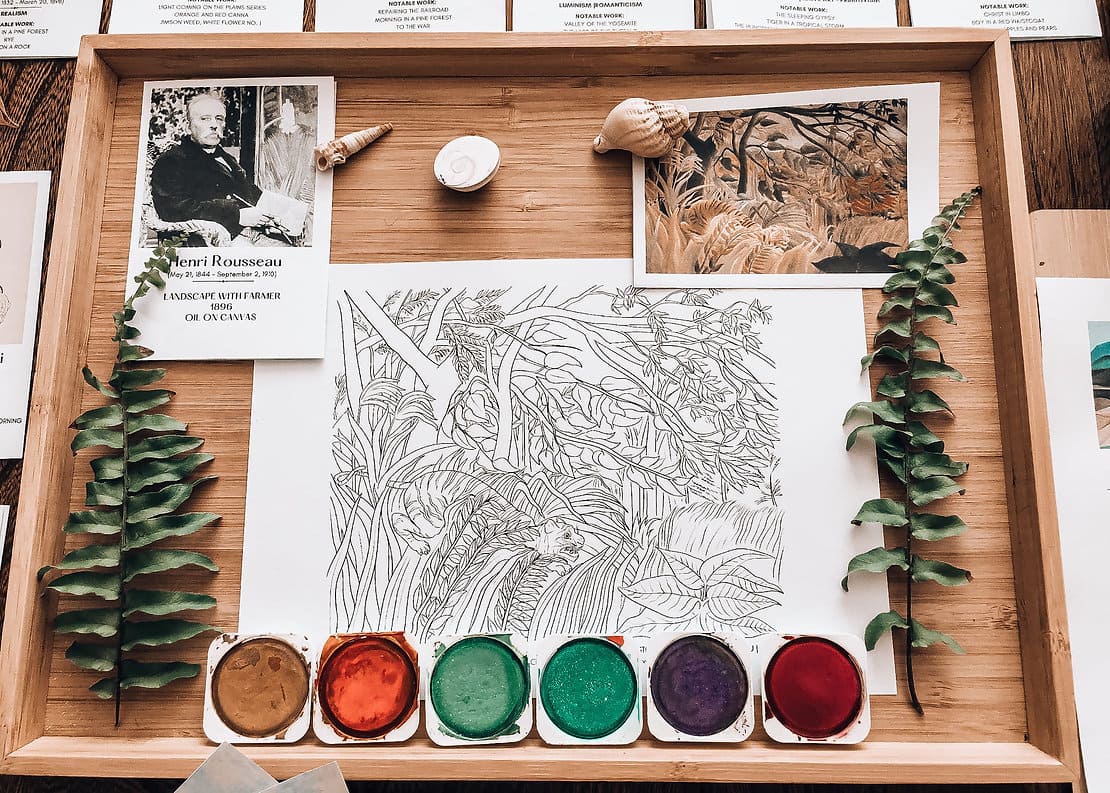
Afternoons belong to the child: nature walks, handicrafts, drawing, building, free reading, music practice, and unstructured play. This is not "time off" from learning — it is where a great deal of the deepest learning happens.

How to build short lessons into your day
The secret to a peaceful Charlotte Mason schedule is a timer and a little trust. Set a lesson for 15 to 20 minutes and stop when the timer sounds, even mid-page. Children quickly learn to give their full attention because they know the lesson is genuinely short. Over a week, those small, focused blocks add up to a remarkable amount of steady progress — without tears.
For younger children, keep lessons even shorter (10 minutes) and lean more heavily on the afternoon rhythm of play and read-alouds. For older students, you can lengthen lessons gradually as their attention matures.
Make your rhythm visual
Children thrive when they can see the shape of the day. A visual daily rhythm — a simple chart or a set of routine cards showing "morning basket, lessons, break, read-aloud, lunch, free afternoon" — removes the endless "what's next?" questions and helps children move through the day with independence and calm. This is especially helpful for younger children and for any child who feels steadier knowing what comes next.

Weekly Planner & 210 Visual Routine Cards
A done-for-you visual scheduling system designed exactly for homeschool families — printable, reusable, and gentle on the eyes. Give your children a rhythm they can see and follow on their own.
See the planner & routine cards →Adapting the schedule for multiple ages
With several children, let your morning basket and read-aloud times be shared by everyone, then stagger the individual lessons. While you work one-on-one with an older child on math, a younger one can color, listen to an audiobook, or work on a hands-on activity. A rotating rhythm — "together, then apart, then together again" — keeps the day flowing without you being pulled in five directions at once.
Planning the whole year (not just the day)
A daily rhythm works best inside a bigger, unhurried plan for the term and year. If you are setting up your new year now, our guide on how to plan your best homeschool year without the overwhelm walks you through it step by step, and our nature study ideas give you gentle, seasonal content to fill those wide afternoons.
For families who want a full library of ready-to-print lessons, planners, and unit studies to build the year around, the Annual Printable Library Pass gives you access to hundreds of Charlotte Mason–inspired resources in one place — so your beautiful rhythm always has something lovely to fill it.

Annual Printable Library Pass
One purchase, a whole year of learning. Get access to 300+ My Mega Bundles printables, planners, and unit studies to build your gentle homeschool year around.
Explore the Library Pass →Frequently asked questions
How many hours a day is a Charlotte Mason homeschool?
For younger children, focused lessons often take only one to two hours in the morning. Older students may spend three to four hours on formal work. The afternoons are intentionally left free for reading, nature, and play, which are considered an essential part of the education.
How long should Charlotte Mason lessons be?
Lessons are kept deliberately short — around 10 to 15 minutes for young children and 20 to 30 minutes for older students — and always end before attention fades. Frequent changes of subject keep the mind fresh.
What time should we start our homeschool day?
There is no required start time. Most families begin between 8:30 and 9:30 a.m. so that focused lessons happen while children are freshest, but the rhythm matters far more than the exact clock time. Choose a start that fits your family and keep it consistent.
Do I need a strict schedule or a flexible rhythm?
A flexible rhythm — a consistent order of the day rather than rigid times — is truest to the Charlotte Mason method and far easier to sustain, especially with multiple children or little ones underfoot.
Ready to build your gentle year? Start with the free Daily Rhythm Chart above, and explore our visual planner and routine cards to make your rhythm something your children can see and follow with confidence.