Key Takeaways
- Spring nature study connects children to the living world through direct observation, journaling, and hands-on exploration from March through May.
- A Charlotte Mason-inspired approach uses nature notebooks, narration, and unhurried time outdoors to build scientific curiosity and a love of learning.
- The 15 activities in this guide span botany, birds, insects, weather, and art, and are designed for children ages 5 through 12.
- Printable resources from My Mega Bundles make it easy to add structure without sacrificing the wonder of outdoor learning.
Spring arrives and suddenly the world your children have been watching through frost-covered windows comes alive. Buds open, birds return, and the soil smells like possibility. Spring nature study for homeschool is one of the most rewarding things you can do with your little ones this season, and you don't need a science degree or an elaborate curriculum to do it beautifully.
This guide gives you 15 hands-on spring nature study activities, a month-by-month observation calendar for March through May 2026, a comparison of the most popular nature study approaches, and answers to the questions homeschool parents ask most. By the end, you'll have everything you need to step outside with intention and welcome the season together.
What Is Nature Study in Homeschool?
Nature study is the practice of observing, recording, and reflecting on the natural world as a core part of a child's education. It's not a single curriculum or a formal subject; it's a habit of attention. In a homeschool context, nature study might mean weekly walks to a local park, keeping a nature notebook, identifying wildflowers in the backyard, or spending an afternoon watching a robin build its nest.
The roots of nature study in homeschooling run deep. Charlotte Mason, the 19th-century British educator whose ideas still shape thousands of homeschools today, placed nature study at the very heart of her philosophy. She believed that children who spent time in direct contact with the natural world developed stronger powers of observation, richer vocabulary, and a genuine love of science that no textbook could replicate. Her methods, as outlined at AmblesideOnline.org, include nature notebooks, "nature walks" (unhurried time outdoors without an agenda), and narration.
Modern homeschool families have built on that foundation, blending Charlotte Mason's observational philosophy with Montessori hands-on principles and STEM-focused inquiry. The result is a flexible, meaningful approach to science that works beautifully across ages and learning styles.
Spring is the ideal season to begin or deepen a nature study practice. The changes are dramatic and fast-moving. A child who goes outside every few days in March, April, and May will witness the entire arc of renewal, from the first crocuses pushing through cold soil to the full canopy of leaves overhead, in just a few short weeks.
How Do You Do Nature Study in Spring?
You do spring nature study by going outside regularly, slowing down, and paying attention. That's the honest answer. The tools and resources you bring along add structure and richness, but they don't replace the core practice of observation.
Here's a simple framework that works for most homeschool families:
1. Set a regular time. Nature study works best when it's a standing appointment, not something squeezed in when everything else is done. Many families do a short (20-30 minute) outdoor observation session two to three times per week.
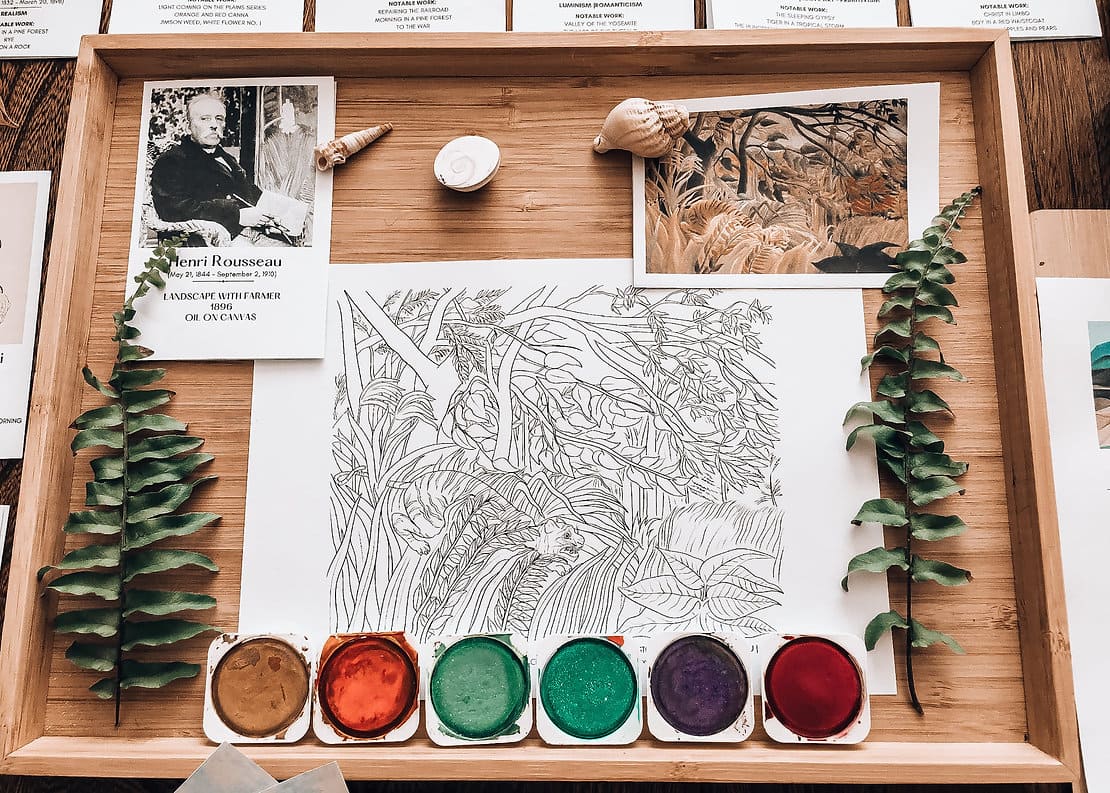
2. Bring a nature notebook. A blank journal or composition notebook is all you need. Children sketch what they see, write a date and location at the top of each entry, and add notes about weather, color, smell, or behavior. Our Nature Coloring Journal is designed with intention for exactly this purpose, with guided pages that prompt observation without over-directing it.
3. Focus on one subject at a time. Don't try to study birds and flowers and insects on the same walk. Pick one focus for each session. This depth-over-breadth approach is central to Charlotte Mason's method and helps children build real understanding.
4. Follow the child's curiosity. If your child is captivated by a caterpillar on the path, stop. That's the lesson. Nature study is not a checklist; it's a relationship with the living world.
5. Add structure gradually. For younger children, pure observation is enough. For older children (ages 8 and up), you can introduce identification guides, labeled diagrams, life cycle studies, and simple scientific recording.
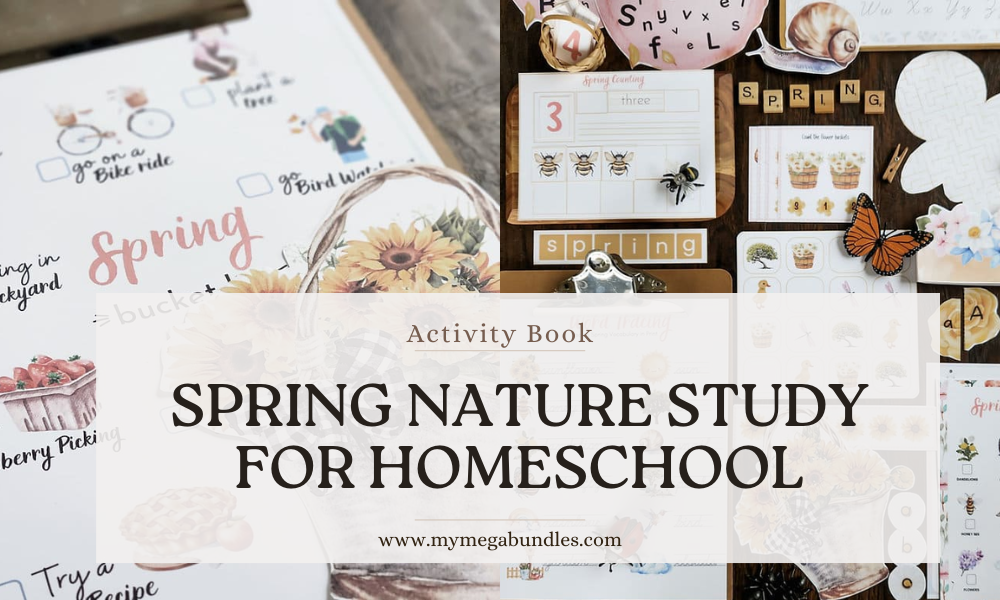
Our Spring Activity Book brings all of this together in one beautifully designed printable resource, priced at just $7.50. It includes seasonal observation prompts, nature journal pages, and activity sheets that complement any nature walk.
What Is the Charlotte Mason Approach to Nature Study?
Charlotte Mason's approach to nature study rests on three principles: first-hand observation, unhurried time outdoors, and the nature notebook. She taught that children should encounter living things directly before reading about them in books. The book comes second, to deepen and confirm what the child has already seen with their own eyes.
In practice, this means:
- Taking nature walks without a fixed agenda, letting children lead their attention
- Keeping nature notebooks with careful pencil or watercolor illustrations and brief written observations
- Using narration (telling back what they observed) rather than formal quizzes to reinforce learning
- Studying a small number of subjects deeply rather than surveying everything broadly
For spring specifically, Charlotte Mason's students would focus on local wildflowers in March, returning birds in April, and insects and pond life in May. They would sketch the same flower at different stages of bloom, note the behavior of the same bird returning to the same tree, and build a seasonal picture over weeks of patient observation.
You can explore the full scope of Charlotte Mason's nature study recommendations through AmblesideOnline.org, which offers free, well-organized guidance for families following her method.
Seasonal Spring Nature Study Calendar: March Through May
Use this calendar as a loose guide for what to observe each month. Adjust for your region; these observations are most accurate for USDA hardiness zones 5-7.
|
Month |
Focus Area |
What to Observe |
Notebook Activity |
|
March |
Soil & Early Plants |
First crocuses and snowdrops; soil texture and temperature; earthworms after rain |
Sketch the first flower you find; record date and location |
|
March |
Weather & Sky |
Cloud types; rain patterns; lengthening days |
Simple weather log: temperature, cloud type, precipitation each morning |
|
April |
Birds |
Returning migrants (robins, bluebirds, swallows); nest building; birdsong |
Draw a bird from observation; record its song in words |
|
April |
Wildflowers & Trees |
Dandelions, violets, trillium; tree buds opening to leaves |
Press a flower (see our [flower pressing guide](/blogs/news/flower-pressing-with-children)); sketch leaf shapes |
|
May |
Insects |
Bees, butterflies, beetles; caterpillars; pond insects if accessible |
Life cycle diagram for a butterfly or bee; magnifying glass sketches |
|
May |
Full Plant Life Cycles |
Seeds sprouting; flowers forming fruit; garden plants growing |
Plant a seed; photograph or sketch growth every 3 days |
15 Hands-On Spring Nature Study Activities
These activities are organized from simplest to most involved. Most can be completed with supplies you already have at home. For printable support materials that make each activity richer and more structured, visit our Nature Study Printables collection and Spring Printables collection.
1. Start a Nature Notebook
The foundation of all other activities. Give each child a blank notebook and begin with this instruction: "Draw what you see, not what you think it looks like." Date every entry. Work in pencil first, then add color. Aim for at least two entries per week throughout spring. Our Nature Coloring Journal ($7.50) provides beautifully structured pages that guide young observers without over-directing them.
2. The First Flower Hunt
In early March, go outside and search for the very first flower of the season. Wherever you are in North America, something is blooming or about to bloom. Sketch it, measure it, note its color, count its petals, and press a sample between wax paper. This simple activity teaches systematic observation and builds anticipation for the season ahead.
3. Press and Preserve Spring Flowers
Flower pressing is one of the most beautiful nature study traditions, and it creates keepsakes that last for years. Read our full guide on flower pressing with children for step-by-step instructions. The preserved flowers can be used later for art projects, nature journal decoration, or a spring botanical display.
4. Bird Watching and Identification Log
April is prime time for returning migrants. Set up a simple bird log, a sheet of paper or journal page with columns for bird name, date, location, and behavior. Use a free app like Merlin Bird ID (Cornell Lab) to identify birds by photo or song. Our Birds Unit Study ($12) includes identification sheets, life cycle pages, and bird behavior observation prompts designed for elementary-age children.
5. Plant a Seed and Observe Its Life Cycle
This is the hands-on anchor activity for understanding plant life cycles. Each child plants a fast-growing seed (beans, sunflowers, and radishes all work well) in a small cup. They observe and sketch the seed every two to three days, documenting germination, root development, the emergence of the first leaves, and the appearance of the first true leaves. Connect the observation to our Plants Life Cycle Series ($12), which provides labeled diagrams, vocabulary pages, and comprehension activities to deepen the learning. For a broader look at plant growth in the garden, our post on plant life cycles for homeschool covers everything you need.
6. Dandelion Study
The dandelion is one of the most perfect nature study subjects in existence. It's everywhere, it's free, it's generous with its time (it blooms for weeks), and it demonstrates an extraordinary range of botanical concepts. Study the leaf shape, the flower structure, the seed head, and the root. Our Dandelion Discovery Kit ($4.95) is a wonderfully affordable printable pack that turns this common "weed" into a complete mini unit study.
7. Cloud Journaling
Weather observation is often overlooked in nature study, but it builds real meteorological literacy. Each morning for two weeks in March or April, children step outside, look up, and sketch or describe the cloud formations they see. Introduce the three main cloud types: cumulus (puffy), stratus (layered), and cirrus (wispy). Note whether rain follows on days with certain cloud types. This is science, observation, and pattern recognition all in one.
8. Soil Investigation
Before anything can grow, you need good soil. Dig a small hole (6 inches deep) in your yard or a local park and examine what you find. How many earthworms? What color is the soil at different depths? Is it sandy, clay-heavy, or loamy? Children can test soil with a simple jar test (fill a jar with soil and water, shake it, and observe how the layers separate over 24 hours). This activity pairs beautifully with our gardening with children homeschool post.
9. Insect Hotel Building
Build a simple insect hotel from a wooden box filled with bundles of bamboo tubes, pine cones, rolled cardboard, and bark. Place it in a sunny spot in your yard or on a balcony and observe it over several weeks. Which insects move in? When do they arrive? This activity teaches habitat concepts, insect behavior, and conservation in a completely hands-on way.
10. Nature Scavenger Hunt
Create a seasonal scavenger hunt list tailored to your region and the specific week of spring. Items might include: something yellow, a feather, a seed pod, a smooth stone, an animal track, a flower with 5 petals, evidence of an insect. The act of searching sharpens observation and turns a routine walk into a focused scientific expedition. Our Spring Activity Book ($7.50) includes ready-made scavenger hunt pages alongside dozens of other seasonal activities.
11. Butterfly Life Cycle Study
Spring is the ideal time to observe and document the butterfly life cycle. If you can find caterpillars locally, raise them through metamorphosis in a mesh habitat. If not, use careful observation of any butterflies you see outdoors combined with a detailed diagram study. Track the four stages: egg, larva (caterpillar), pupa (chrysalis), and adult. Our Plants Life Cycle Series includes life cycle resources that complement this study beautifully.
12. Spring Phenology Map
Phenology is the study of seasonal timing in nature, and it's genuinely fascinating for older children (ages 9 and up). Create a simple hand-drawn map of your yard, street, or local park. Over the course of April and May, mark when specific plants first bloom, when specific birds first arrive, and when specific insects first appear. By the end of May, children have a visual record of spring's unfolding in their specific place. This is real science, and it's done with pencils and patience.
13. Bark and Leaf Rubbings
Place a sheet of thin paper over a piece of bark or a leaf and rub a crayon gently over the surface. The texture transfers to the paper in beautiful detail. Collect a series of rubbings from different trees throughout spring and compare them. This activity works for all ages, produces stunning nature journal pages, and teaches children to notice the differences between individual trees that they might otherwise walk past without a glance.
14. Pond or Stream Study
If you have access to a pond, stream, or wetland, this is one of the most rewarding spring nature study activities you can do. In spring, pond life is extraordinarily active. Look for frog spawn, tadpoles, water beetles, pond skaters, and aquatic plants. Use a white tray and a dip net to collect and examine small creatures before returning them carefully. Connect the observation to your nature notebooks with detailed sketches and written notes.
15. Nature Study Sketch-a-Thon
At the end of May, set aside a dedicated morning for a nature sketch-a-thon. Bring all your nature notebooks, go to your favorite outdoor spot, and spend two to three hours sketching, writing, and observing. No phones, no structured activities, just time and attention. This final activity of the season is a quiet celebration of everything your children have learned to see. For a complete, structured approach to combining all these activities, visit our nature study bundle post for curated printable resources.
Step-by-Step: How to Start a Spring Nature Study Practice (for Beginners)
If this is your family's first season doing intentional nature study, start here. This five-step approach works beautifully even if you have no curriculum, no outdoor space beyond a sidewalk, and no prior experience with formal science.
Step 1: Gather Your Materials
You need a notebook per child, a pencil, and a way to get outside. A magnifying glass is wonderful but optional. No field guides, apps, or special equipment are required to begin.
Step 2: Choose a Regular Time
Select two to three consistent days per week for outdoor observation. Morning is ideal, but any time works. Put it on your schedule the way you would a math lesson.
Step 3: Go Outside and Say Nothing
For the first five minutes, don't direct your children's attention at all. Let them find what interests them. Then, gently ask: "What do you notice? What's different from last week?" These two questions are the heart of nature study.
Step 4: Sketch and Record
Back inside or right on the spot, open the notebook and draw what you observed. Encourage detail, not artistic perfection. Date the entry, note the weather, and write two to three sentences about what was seen.
Step 5: Add Resources Gradually
After a few weeks, introduce one structured resource, such as our Spring Activity Book ($7.50) or the Nature Coloring Journal ($7.50). These printables add structure and vocabulary to the observations your children are already making.

Comparing Nature Study Approaches: Charlotte Mason vs. Montessori vs. STEM-Focused
Every homeschool family has a different philosophy, and nature study adapts beautifully to all of them. Here's how the three most popular approaches look in practice during a spring nature study session.
|
Approach |
Core Philosophy |
Spring Activities |
Materials Needed |
Best For |
|
Charlotte Mason |
First-hand observation, nature notebooks, narration, unhurried time |
Nature walks, botanical sketching, bird observation logs, pressed flowers |
Nature notebook, pencils, watercolors |
Families who value literature, living books, and a gentle pace |
|
Montessori |
Hands-on discovery, child-led learning, concrete to abstract |
Sensorial soil study, insect sorting, seed-to-plant sequencing, outdoor work trays |
Trays, real specimens, labeling materials, measurement tools |
Families with young children (ages 3-8) who learn by doing |
|
STEM-Focused |
Inquiry-based, hypothesis-driven, data collection, experimental method |
Weather data logging, plant growth experiments, phenology mapping, habitat building |
Recording sheets, measuring tools, experiment guides |
Families who want to connect outdoor learning to formal science standards |
|
Eclectic/Hybrid |
Draws from all approaches based on child's needs |
Mix of journaling, hands-on projects, and structured activities |
A combination of the above |
Most homeschool families in practice |
No approach is superior to the others. The best nature study is the one that gets your family outside, paying attention, and coming back again next week.
What Are Spring STEM Activities for Elementary?
Spring offers a rich set of STEM opportunities that connect naturally to outdoor observation. Some of the most effective spring STEM activities for elementary-age children include:
Science: Plant a seed and track its growth over four weeks, recording height, leaf count, and observations every three days. Compare two plants grown in different soil types or light conditions.
Technology: Use a free weather app or thermometer to record daily high temperatures in your backyard throughout April. Create a simple bar graph of the data at the end of the month.
Engineering: Build an insect hotel or a simple bird feeder from household materials. Test which design attracts the most visitors over two weeks of observation.
Math: Count the petals on 10 different flowers and calculate the average. Measure the height of a plant every three days and create a line graph. Calculate how many days it takes for a bean seed to germinate.
These activities align with elementary science standards and connect naturally to the observational work of nature study. For families who want structured STEM support, our Spring Activity Book includes activity pages designed to bridge the gap between outdoor exploration and scientific documentation.

Frequently Asked Questions
What is nature study in homeschool?
Nature study in homeschool is the regular practice of observing and recording the natural world as a central part of a child's education. It typically includes outdoor observation sessions, nature notebooks or journals, and the study of plants, animals, weather, and seasonal changes. It's used by Charlotte Mason, Montessori, classical, and eclectic homeschool families as a foundation for science learning.
How do you do nature study in spring?
Start by going outside two to three times per week with a blank notebook and a pencil. Let your children observe freely for a few minutes, then encourage them to sketch or describe what they see. Build in one focused subject each week, such as birds, wildflowers, or soil, and add field guides or printable resources as their curiosity grows. The most important thing is consistency: short, regular sessions are far more valuable than occasional elaborate outings.
What are spring STEM activities for elementary?
Effective spring STEM activities for elementary include planting seeds and tracking growth data, recording daily temperatures and graphing the results, building insect hotels and observing visitors, identifying cloud types and predicting weather, and conducting simple experiments comparing plant growth in different conditions. These activities are most powerful when paired with outdoor observation and a nature notebook.
What is the Charlotte Mason approach to nature study?
Charlotte Mason's approach emphasizes first-hand observation over reading about nature in books. Children take regular nature walks (unhurried time outdoors without a fixed agenda), keep nature notebooks with careful illustrations and written observations, and use narration to reinforce what they've seen. Mason believed that a child who had truly looked at a flower understood it far better than one who had only read a description of it. Her method prioritizes depth, wonder, and direct relationship with the natural world.
Your Best Spring Is Just Outside the Door
Spring nature study doesn't require a perfect curriculum, an impressive outdoor space, or hours of planning. It requires a notebook, a pencil, and the willingness to go outside and pay attention. Your children will do the rest.
The 15 activities in this guide are designed to be flexible, affordable, and genuinely enjoyable, not just for your children, but for you as well. Whether you're deep into a Charlotte Mason approach or simply looking for meaningful ways to welcome the season, there's a place to begin right here.
When you're ready to add beautifully designed printable support to your spring nature study, our Spring Activity Book ($7.50) is the best place to start. Or explore the full Nature Study Printables collection and the Spring Printables collection for resources that span every season and subject.
"I've tried several spring nature study resources over the years, but the Spring Activity Book from My Mega Bundles is the one we actually use every week. It has exactly the right balance of structure and freedom, and my children love filling in their observation pages after each walk. It's become our favorite part of our homeschool spring."
— Sarah M., Homeschool Mom of three
Spring is here. Step outside. The season is waiting.